
You land at Sandakan Airport at 10:30 a.m., excited to see orangutans, but your lodge transfer leaves at noon and your only river cruise starts before sunrise the next day. That tight schedule can turn a promising wildlife trip into a long series of missed connections.
Good Borneo rainforest trip planning starts with animal behavior, not with a list of attractions. Sabah offers two different experiences: close, structured viewing at Sepilok and less predictable wildlife encounters along the Kinabatangan River. This guide shows how to combine them, what the published 2026 costs look like, and which shortcuts usually fail. The rules discussed here are Sabah, Malaysia wildlife rules, not U.S. state law. This is not legal advice — consult a licensed attorney.
How do you build a Sandakan, Sepilok, and Kinabatangan route?
Use Sandakan as a practical buffer
Sandakan is the logical entry point for this wildlife route. Sepilok lies close to the city and airport, while most Kinabatangan lodges sit farther inland or along river-access roads. A night in Sandakan or Sepilok protects the trip from a late flight and makes it easier to reach the morning orangutan session without crossing half the district before breakfast.
Keep the transfer day light
Most visitors should avoid landing in Sandakan and immediately scheduling a demanding river program. The overland journey from Sandakan Airport to the Kinabatangan area often takes about two hours, and some lodge transfers include additional road or boat time. A planned 10:00 a.m. arrival can become a 1:00 p.m. check-in after baggage delays, lunch, fuel stops, and loading luggage.
- Fly into Sandakan and confirm the airport transfer before departure.
- Stay one night near Sepilok if the flight arrives after midday or if the orangutan centre is a priority.
- Visit Sepilok during a scheduled feeding session, then leave time for the nearby sun bear centre or rainforest trails.
- Transfer to the Kinabatangan River the next morning, preferably early enough to reach the lodge before the afternoon cruise.
- Stay at least two nights on the river; three nights is the better choice for wildlife-focused visitors.
- Return to Sandakan with a buffer before any onward flight. Do not place a tight international connection after a long road-and-boat transfer.
| Trip stage | Practical timing | Reason |
|---|---|---|
| Sandakan Airport to Sepilok | About 20–40 minutes by road, depending on traffic and lodging | Allows a low-stress first evening |
| Sepilok visit | Morning or afternoon session | Matches the centre’s fixed feeding schedule |
| Sandakan to Kinabatangan | About 1.5–2 hours overland before lodge-specific boat time | Leaves room for the afternoon cruise |
| Kinabatangan stay | Minimum 2 nights; best at 3 nights | Creates more dawn and dusk viewing windows |
This route is more reliable than trying to visit Sepilok and complete a river cruise on the same day. A rushed itinerary saves a night on paper but can remove the very wildlife experience that justified the trip.
What wildlife can you realistically see on the Kinabatangan?
Are wild orangutans guaranteed?
No. A responsible guide should never guarantee a wild orangutan sighting. The animals move through a large, fragmented landscape, and dense leaves can hide them even when they are nearby. Sepilok gives travelers a more structured chance to see rehabilitating orangutans near a managed feeding area. The Kinabatangan offers the more meaningful possibility of seeing a wild animal in its natural range, but the result may be a distant shape, a nest, or no sighting at all.
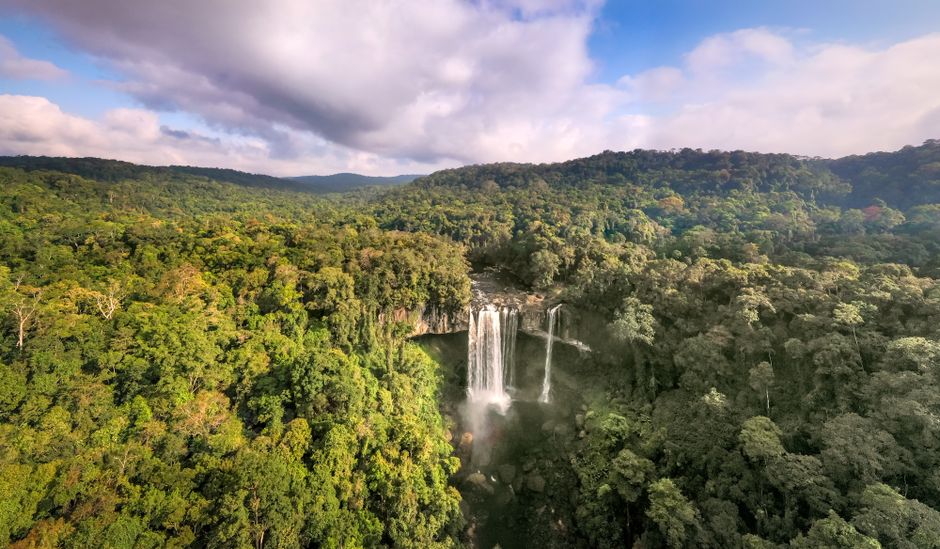
That distinction protects the traveler from false expectations. A river safari is not a zoo visit. The Lower Kinabatangan Wildlife Sanctuary covers a large floodplain, and guides work with tracks, calls, feeding trees, water levels, and recent reports to choose a route.
Why do dawn and dusk matter?
The river is an open corridor through dense forest. Its banks give guides a better line of sight than a closed trail, while early and late hours reduce glare and heat. Proboscis monkeys often sit in riverside trees, hornbills cross between feeding areas, and crocodiles may show only their eyes above the water. A quiet boat with an experienced guide can reveal more than a loud boat that races from one location to the next.
What else deserves camera space?
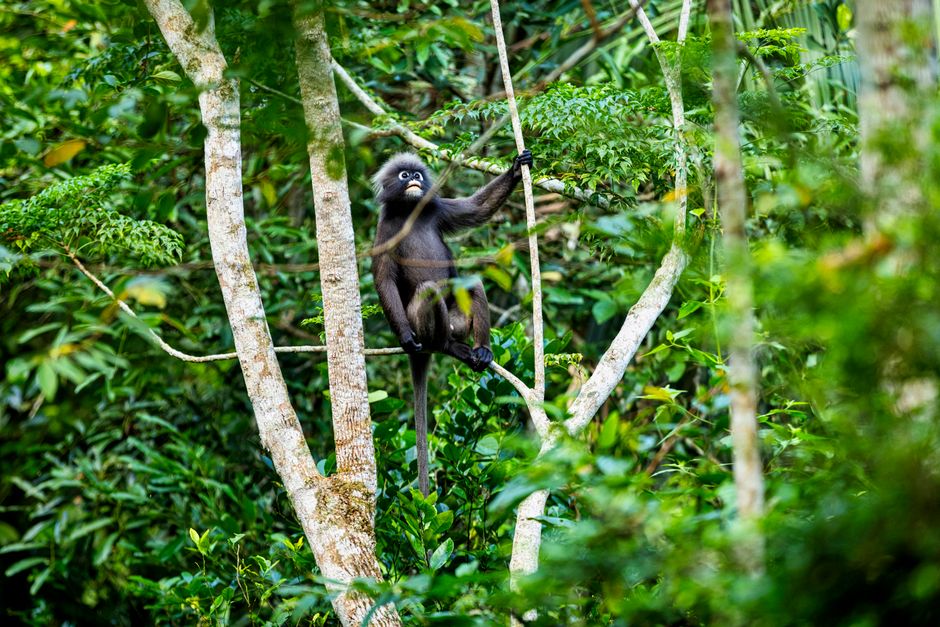
Plan for a mixed wildlife list. Proboscis monkeys, long-tailed macaques, silvered langurs, rhinoceros hornbills, oriental pied hornbills, kingfishers, monitor lizards, and saltwater crocodiles are all plausible sightings. Bornean pygmy elephants occur in the wider region but are not a scheduled show. Their movements can be hard to predict, and guides may cancel a closer approach if the riverbank or road creates a safety problem.
The clear verdict is to measure the trip by quality of observation, not by a checklist. Seeing a family of proboscis monkeys feed quietly at dusk can be a better encounter than a rushed, distant orangutan photograph taken from a crowded boat.
Which access and stay option gives the best value?
My pick for most first-time visitors is a three-day river package with scheduled transfers, then independent visits around Sepilok. The river section is logistically awkward to arrange from scratch, while Sepilok attractions are close together and easy to combine. Published prices change, so verify the amount and inclusions before paying.
Compare the 2026 cost anchors
| Place or package | Published 2026 reference price | Best use | Verdict |
|---|---|---|---|
| Sepilok Orangutan Rehabilitation Centre | RM30 non-Malaysian adult; RM15 child; camera fee may apply | Structured orangutan education and viewing | Best low-cost anchor for a first wildlife day |
| Bornean Sun Bear Conservation Centre | RM50 non-Malaysian adult; RM25 child | Rescued sun bears and conservation interpretation | Worth adding because it shares the Sepilok entrance area but requires a separate ticket |
| Rainforest Discovery Centre Sepilok | RM30 non-resident adult; RM20 child; night walk listed at RM50 adult | Forest trails, canopy views, and nocturnal activity | Best choice for travelers who want rainforest structure beyond feeding platforms |
| Sukau Rainforest Lodge 3D2N package | Published packages from about RM2,650 per person | Meals, lodging, transfers, and river cruises in one booking | Best convenience choice when the itinerary includes several cruises |
The Bornean Sun Bear Conservation Centre lists its own admission rates and opening hours, and the Rainforest Discovery Centre publishes separate daytime and night-walk prices. These centres are not interchangeable. Sepilok focuses on orangutan rehabilitation, BSBCC focuses on sun bear conservation, and RDC gives you a forest-and-canopy experience.
When not to pay for a luxury lodge
Do not book a high-priced lodge solely for the label “rainforest.” If your priority is a short introduction to river wildlife, a mid-range lodge with two included cruises may give nearly the same basic viewing structure. Pay more for a luxury property when you value quieter boats, stronger guiding, private transfers, better food, or a longer stay. Do not pay more expecting guaranteed elephants or orangutans.
For a tight budget, stay near Sepilok, use the published entrance fees, and spend the saved money on an extra river night. More time on the water usually has greater wildlife value than a larger room.
What should you pack and how should you behave?
Pack for rain, heat, and patience rather than for a staged wildlife show. A lightweight long-sleeved shirt, quick-dry trousers, a waterproof layer, closed walking shoes, insect repellent, a headlamp, and a dry bag cover the practical basics. Bring enough camera battery power for a full day, but avoid building the trip around heavy equipment.
Pack for wet heat
Rain can arrive during a cruise, and a trail can remain muddy after the sky clears. Use a small bag that closes securely. A plastic bag inside a dry bag gives phones and passports a second layer of protection. Avoid cotton-heavy clothing because it stays wet and becomes uncomfortable during transfers.
Protect your camera and your attention
A telephoto lens helps with distant wildlife, but a large lens does not create a closer animal. Ask the guide before changing seats or standing in a moving boat. Keep binoculars available for small birds and monkeys that sit high in the canopy. Listen for calls; often the sound arrives before the animal enters view.
Follow the rules at every stop
Stay on marked paths, follow staff instructions, and keep food away from viewing areas. Free-ranging macaques can grab loose bags, while human food can alter animal behavior. A good visitor leaves no food, plastic, or loud disturbance behind.
The best route depends on the time and experience you want, but the choice can be stated plainly:
| If your priority is… | Choose… | Accept this tradeoff |
|---|---|---|
| A reliable introduction to orangutan rehabilitation | Sepilok for one full morning or afternoon | It is not a guaranteed wild sighting |
| Wild river wildlife | Kinabatangan for at least 2 nights, preferably 3 | Sightings remain unpredictable |
| Birds and forest trails | Rainforest Discovery Centre plus a longer river stay | More walking and weather exposure |
| Simple logistics | An all-inclusive Kinabatangan package | Less freedom to change the schedule |